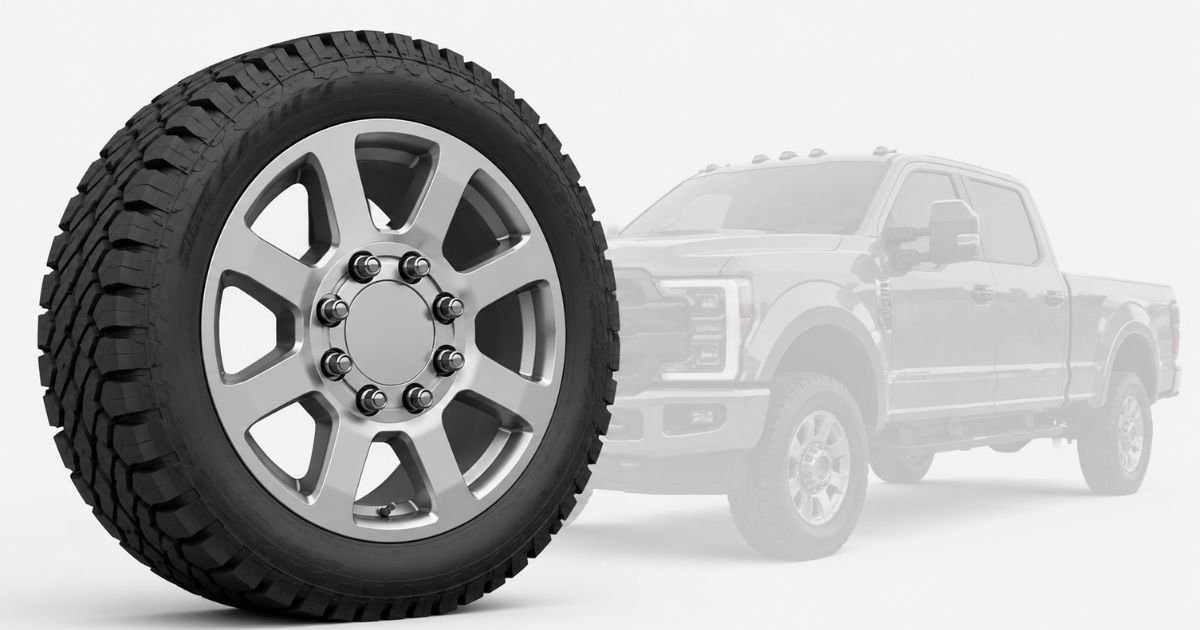
If you’ve ever typed “Ford F250 lug pattern” into a search bar, you already know the frustrating part: the answer depends entirely on which truck you’re standing in front of. Unlike a compact sedan that keeps one bolt pattern for twenty years, the F250 has worn three different lug configurations since 1973, and mixing them up isn’t a minor inconvenience — it’s a safety issue.
This confusion shows up everywhere. A shop tech pulls the wrong wheel off the shelf because “it’s an F250, so it’s 8-lug.” A restorer buying wheels for a 1980s model assumes modern Super Duty specs apply. A distributor stocks one bolt pattern across an entire product line and eats a wave of returns when customers discover their truck doesn’t match.
The truth is that F250 wheel fitment is a layered problem. Bolt pattern gets you in the door, but hub bore, offset, thread pitch, and torque spec all have to agree before a wheel is actually safe to run. This guide walks through the full Ford F250 lug pattern timeline year by year, explains every spec that governs proper wheel fitment, and breaks down wheel sizing, offset, SRW/DRW differences, installation specs, and the mistakes that cause the most returns and the most risk.
Key Takeaways
- The Ford F250 lug pattern has changed three times since 1973: 8×165.1mm (1973–1997), a rare 7×150mm (1997–1999), and 8×170mm (1999–2026 Super Duty).
- A matching bolt pattern alone does not guarantee correct wheel fitment — hub bore, offset, and torque specs all have to align together.
- 17-inch to 18-inch wheels suit off-road and daily driving, while 20-inch to 22-inch wheels suit towing, fleet, and show applications.
- SRW and DRW wheels are never interchangeable, and getting this wrong creates real safety risk under load.
- Correct lug nut torque (165 lb-ft on 1999–2026 trucks) is just as important as picking the right bolt pattern.
Ford F250 Lug Pattern Timeline (1973–2026)
Three distinct eras define the Ford F250 lug pattern history, and understanding them is the fastest way to avoid a mismatched wheel order.
1973–1997 — 8×165.1mm (8×6.5″) Era
From 1973 through 1997, the F250 ran an 8×165.1mm bolt pattern, commonly written as 8×6.5″ in older parts catalogs. This was the industry-standard heavy-duty configuration of the era, shared with Dodge Ram 2500/3500 and Chevrolet/GMC 3/4-ton trucks. It carried the truck’s load reliably for over two decades, but it does not align with anything Ford builds today.
1997–1999 — The Rare 7×150mm Light-Duty Exception
Here’s where most buyers get tripped up. Between 1997 and 1999, Ford’s light-duty F250 briefly used a 7×150mm pattern — a configuration found almost nowhere else in the aftermarket. Production volume was low, aftermarket support is thin, and mismatches on this two-year window are far more common than most people expect.
“The 1997–1999 7-lug pattern is extremely rare — always verify before ordering wheels.”
1999–2026 — 8×170mm Super Duty Standard
Beginning with the 1999 Super Duty redesign, Ford settled on 8×170mm — a wider, stronger pattern built for heavier axles and higher towing capacity. Every generation since, including the 2005 refresh, the 2008 and 2011 updates, the 2017 aluminum-body redesign, and the current P708-generation trucks through 2026, has carried this same Super Duty lug pattern forward.
Ford F250 Lug Pattern Timeline (1973–2026)
| Era | Bolt Pattern | Compatibility |
|---|---|---|
| 1973–1997 | 8×165.1mm (8×6.5″) | Interchangeable within early models only |
| 1997–1999 | 7×150mm | Rare, isolated, limited aftermarket support |
| 1999–2026 | 8×170mm | Standard Super Duty pattern, wide aftermarket support |
Patterns are not interchangeable across these eras. Forcing an incompatible wheel onto a hub can shear studs and cause catastrophic wheel separation.
Complete Ford F250 Wheel Fitment Specs Explained
A bolt pattern match is the first checkbox, not the finish line. Proper wheel fitment on a heavy-duty truck depends on several specs working together.
Bolt Pattern (PCD)
The bolt pattern, or pitch circle diameter, describes the number of lugs and the diameter of the circle they sit on. 8×170mm means eight studs arranged on a 170mm circle — the modern F250 standard since 1999.
Center Bore / Hub Bore
The hub bore is the non-metric measurement that centers the wheel on the axle. Most F250 generations use a 124.9mm hub bore. When a wheel’s bore doesn’t match precisely, the load shifts onto the lug nuts instead of the hub face, which causes vibration and uneven stress — especially noticeable at highway speed.
Wheel Offset
Offset determines how far the wheel’s mounting surface sits relative to the truck’s centerline. A larger positive offset tucks the wheel closer to the chassis; a negative offset pushes it outward for a more aggressive stance.
Lug Thread & Torque
Thread pitch changed alongside the bolt pattern. Pre-1999 trucks generally used 9/16″-18 imperial threads, while 1999–2026 Super Duty trucks use M14×1.5 metric threads. Mixing these is a common and dangerous mistake.
Complete Ford F250 Wheel Fitment Specs
| Parameter | 1973–1997 | 1997–1999 | 1999–2026 Super Duty |
|---|---|---|---|
| Bolt pattern | 8×165.1mm | 7×150mm | 8×170mm |
| Center bore | ~124.9mm | ~124.9mm | 124.9mm |
| Offset range | +10 to +25 | +15 to +30 | +18 to +40 |
| Lug thread | 9/16″-18 | 9/16″-18 / M14 | M14×1.5 |
| Torque spec | 140–150 lb-ft | 150 lb-ft | 165 lb-ft (224 Nm) |
Ford F250 Wheel Sizes by Use Case (16″–22″)
The right wheel size depends on how the truck actually gets used, not just personal preference.
- 17-inch wheels — Best for off-road and overlanding. Taller sidewalls absorb impact and hold up under mixed terrain.
- 18-inch wheels — The daily-driver sweet spot, balancing ride comfort with steering precision.
- 20-inch wheels — Favored for towing and fleet use, where wider contact patches add stability under load.
- 22-inch wheels — Chosen mostly for show trucks and urban builds where visual presence matters more than off-road capability.
Ford F250 Wheel Sizes by Use Case (16″–22″)
| Wheel Size | Best Use Case | Key Benefit |
|---|---|---|
| 17″ | Off-road, overlanding, utility | Tall sidewall, traction, impact resistance |
| 18″ | Daily + light off-road | Balanced ride height and stability |
| 20″ | Highway, towing, fleet | Load stability, reduced sidewall flex |
| 22″ | Urban / show builds | Maximum visual presence |
As sidewall height drops with larger wheels, ride comfort and rough-terrain flexibility drop with it. That trade-off should drive the decision, not the other way around.
Truck Wheel Offset w.r.t Fitment, Clearance & Stance
Wheel offset controls how the wheel sits relative to suspension components and body panels. Most balanced setups land between +18 and +25 for a flush, OEM-plus look — close enough to the suspension for stability without straining steering components.
- Positive offset (+18 to +40): OEM range, safe for towing and daily driving.
- Zero offset (0): Flush with the fender, a common aftermarket stance choice.
- Negative offset (below 0): Increases leverage on wheel bearings and raises the risk of fender contact.
Pushing offset toward the extreme negative end (down to -25 to -44) creates a wider, more aggressive stance often seen on show builds — but it comes at the cost of steering feel and long-term bearing wear.
Case Studies
Real configurations show how wheel size, offset, and tire choice work together rather than in isolation.
Off-road build: A 17-inch wheel in 8×170 fitment paired with all-terrain tires gives a taller sidewall profile that flexes with suspension travel — ideal for overlanding and mixed-terrain trail use.
Daily driver: An 18-inch wheel with a moderate offset around +20 balances ride comfort with predictable handling for commuting and highway miles.
Tow/fleet rig: A reinforced 20-inch wheel with a higher load rating handles constant heavy-load cycling better than a lighter-duty wheel, making it the standard choice for commercial fleets.
Show truck: A 22-inch wheel with a lower-profile tire maximizes visual stance but sacrifices sidewall cushioning, so it’s best reserved for smooth city roads rather than rough terrain.
Fitment Differences of SRW and DRW
SRW and DRW wheels are built for two very different load conditions, and understanding the difference matters before ordering anything.
Single Rear Wheel (SRW) trucks run one wheel per side on the rear axle. They offer better maneuverability, more tire rotation flexibility, and far broader aftermarket support — making them the default for daily driving and light towing.
Dual Rear Wheel (DRW), or dually, trucks run two wheels per side for added load capacity and towing stability. DRW wheels require specific width and offset to maintain proper spacing between the inner and outer wheel.
Fitment Differences of SRW and DRW
| Configuration | Wheels per Rear Side | Offset Range | Load Capacity |
|---|---|---|---|
| SRW | 1 | +18 to +40 | Moderate to high |
| DRW | 2 | Special positive offset | Very high (commercial) |
SRW and DRW wheels are never interchangeable. Installing the wrong type causes improper load distribution, tire overheating, and a genuine safety hazard.
Installation & Safety Specifications
Getting the Ford F250 lug pattern right doesn’t matter much if installation is sloppy. Torque is the single most overlooked factor in wheel fitment failures.
Installation & Safety Specifications
| Specification | Value (1999–2026) | Installation Note |
|---|---|---|
| Lug Nut Torque | 165 lb-ft (224 Nm) | Use star pattern; re-torque after 50 miles |
| Center Hub Bore | 124.9mm | Hub-centric fit required; use rings for larger bores |
| Thread Pitch | M14×1.5 | Pre-1999 uses 9/16″-18; never mix hardware |
| Lug Nut Seat | 60° Conical | Standard on most aftermarket F-250 wheels |
Under-torquing risks the wheel loosening under load; over-torquing stretches studs and distorts the mounting surface. Neither mistake shows up immediately — both show up later, often at highway speed.
Choosing the Right Wheel Type (Material & Manufacturing)
Wheel construction affects strength, weight, and long-term durability just as much as the bolt pattern itself.
- Cast wheels — Cost-effective and widely available, suited to daily driving and light-duty use.
- Flow-formed wheels — A stronger, lighter middle ground, good for mixed terrain and overlanding.
- Forged wheels — The highest strength-to-weight ratio, built for towing, commercial fleets, and severe off-road use.
Choosing the Right Wheel Type
| Type | Weight | Strength | Best F-250 Use |
|---|---|---|---|
| Cast | Heavy | Moderate | Daily, light duty |
| Flow-Form | Medium | High | Overlanding, mixed terrain |
| Forged | Lightest | Very High | Towing, commercial, extreme off-road |
Aftermarket Strategy for Distributors & Retailers
Stocking aftermarket wheels for the F250 line means planning around three separate eras, not one universal spec. 17-inch wheels in 8×170 fitment tend to move the highest volume, driven by off-road and overlanding demand. 20-inch wheels carry higher margins, often sold into fleet and premium-upgrade customers willing to pay for stability and looks together.
Aftermarket Strategy for Distributors & Retailers
| Wheel Size | Volume Potential | Margin Potential | Target Customer |
|---|---|---|---|
| 17″ (8×170) | High | Medium | Off-road, overlanding, utility |
| 18″ / 20″ | Medium | High | Daily drivers, fleets, premium upgrades |
| 22″ | Low | Very High | Show builds, urban styling |
A simple five-point verification checklist — model year and platform, SRW or DRW, wheel size, offset and construction, and final hub-bore/torque confirmation — cuts return rates dramatically before an order ever leaves the warehouse.
Common Fitment Mistakes to Avoid
Most F250 wheel fitment problems trace back to skipped verification steps, not complex mechanical failures.
Common Fitment Mistakes to Avoid
| Mistake | Root Cause | Impact |
|---|---|---|
| Wrong bolt pattern | Confusing 8×170 with 8×165.1 or 7×150 | High — immediate return, safety risk |
| Wrong offset | Ignoring the +18 to +40 range | High — rubbing, bearing strain |
| Ignoring hub bore | Skipping centering rings on larger bores | Medium — vibration complaints |
| Incorrect torque | Under- or over-tightening lugs | High — wheel separation risk |
| SRW/DRW mix-up | Installing SRW wheels on a dually axle | High — load failure, liability |
Avoiding these five issues alone resolves the large majority of wheel compatibility complaints reported across the aftermarket.
Ford F250 vs. F350 Bolt Pattern — Are They the Same?
Yes, for the most part. Since the 1999 Super Duty redesign, SRW versions of both the F250 and F350 share the same 8×170mm bolt pattern, the same 124.9mm hub bore, and the same M14×1.5 thread. The difference shows up in load rating and DRW configurations on higher F350 trims, not in the core lug pattern itself. Always confirm SRW versus DRW before assuming cross-compatibility.
Ford F250 Lug Pattern 5 Lug
This is a common mix-up, but the F250 has never used a 5-lug bolt pattern. A 5-lug configuration belongs to the lighter-duty F-150 and Ranger lineup, not the heavier F250. Every F250 generation has run either 7-lug or 8-lug hardware, so anyone searching for a 5-lug F250 wheel is almost certainly looking at the wrong truck.
Ford F250 Bolt Pattern By Year
Ford F250 Bolt Pattern by Year
| Years | Bolt Pattern |
|---|---|
| 1973–1996 | 8×165.1mm |
| 1997 | 8×165.1mm (early) / 7×150mm (transition) |
| 1998–1999 | 7×150mm |
| 1999–2004 | 8×170mm |
| 2005–2007 | 8×170mm |
| 2008–2016 | 8×170mm |
| 2017–2022 | 8×170mm |
| 2023–2026 | 8×170mm |
Ford F250 Lug Pattern OEM
OEM specs represent Ford’s factory-verified combination of bolt pattern, hub bore, offset, and load rating for a given model year. Aftermarket options can widen those parameters, but any deviation — larger bore, different offset, forged versus cast construction — should be checked against OEM baseline numbers before installation to avoid compromising wheel fitment.
2016 Ford F250 Lug Pattern
The 2016 F250 uses the 8×170mm Super Duty bolt pattern, a 124.9mm hub bore, M14×1.5 thread, and a 165 lb-ft torque spec. SRW and DRW versions both share this core lug pattern, differing only in wheel width and offset.
2026 Ford F250 Lug Pattern
The current-generation 2026 Super Duty carries the same 8×170mm pattern forward, confirming three decades of continuity on this platform. Trim-specific offset and wheel size can vary slightly, so checking by trim remains good practice even within this modern era.
2022 Ford F250 Lug Pattern
The 2022 F250 sits within the pre-refresh Super Duty generation and uses the standard 8×170mm bolt pattern, matching every Super Duty model year back to 1999.
2007 Ford F250 Lug Pattern
The 2007 model year falls just before the 2008 platform update, and it also uses 8×170mm, confirming that the pre-2008 and post-2008 Super Duty trucks share identical lug hardware despite other mechanical changes.
Ford 8 Lug Bolt Pattern Years
Ford’s 8-lug Ford F250 lug pattern spans two distinct windows: 1973–1997 at 8×165.1mm, and 1999–2026 at 8×170mm. The 1997–1999 gap in between used the rare 7-lug 7×150mm pattern, making it the one exception inside an otherwise consistent 8-lug history.
Ford F250 Lug Pattern Torque Specs & Tools Needed
Getting the numbers right matters little without the right tools. A calibrated torque wrench rated for at least 165 lb-ft is essential for modern Super Duty trucks, along with a breaker bar for initial loosening and a torque-rated impact driver for shops handling volume installs. Always tighten lugs in a star pattern, never a circular sequence, to seat the wheel evenly against the hub. Re-torquing after the first 50 to 100 miles catches any settling that happens as components seat under real driving load.
Frequently Asked Questions
What year did Ford switch from 8×6.5 to 8×170?
Ford switched in 1999 with the Super Duty redesign.
What trucks have an 8×6.5 lug pattern?
Older Ford, Dodge Ram, and Chevy/GMC heavy-duty trucks.
F-250 6 or 8 lug?
The F-250 uses 8 lugs, never 6.
Can any F250 share the same wheel size?
No — it depends on generation, bolt pattern, and offset.
What wheel size is most suitable for mixed driving?
18 to 20 inches balances comfort, stability, and availability.
Can wheel adapters be used to alter the Ford F250 lug pattern?
Yes, but only as a controlled, verified solution.
Are aftermarket wheels required to be rebalanced?
Yes — always balance aftermarket wheels after installation.
Are hub-centric rings always required for aftermarket wheels?
Yes, when the wheel’s bore exceeds the hub diameter.
Conclusion
Understanding the Ford F250 lug pattern means understanding three separate eras, not one universal spec. From the 8×165.1mm trucks of the 1970s through the rare 7×150mm exception and into the modern 8×170mm Super Duty standard, every generation carries its own combination of hub bore, offset, thread pitch, and torque requirements. Bolt pattern gets a wheel in the door, but real wheel fitment depends on every spec working together — and that’s what separates a clean installation from a costly comeback.
15 common things that weigh 300 grams
16 common things that weigh 500 grams
22 common things that weigh 20 grams
15 common things that weigh 10 grams
20 common things that weigh 1 gram
18 common things that weigh 100 grams
20 common things that are 10 inches long
18 common things that are 16 inches long
14 common things that are 40 inches long
things that are 40 inches long
20 common things that are 15 inches long
18 common things that are 12 inches long
things that are 40 inches long
18 common things that are 7 inches long
18 common things that are 18 inches long
16 common things that are 4 inches long
20 common things that are 8 inches long
19 common things that are 3 inches long
15 common things that are 20 feet long
18 common things that are 13 inches long
17 common things that are 20 inches long
17 common things that are 6 inches long
17 common things that are 5 inches long
13 common things that are 2 inches long
20 common things that are 24 inches long
20 common things that are 30 inches long
20 common things that are 36 inches long
15 common things that are 59 inches long
20 common things that are 19 inches long
20 common things that are 26 inches long
20 common things that are 100 inches long
20 common things that are 9 inches long
20 common things that are 57 inches long
20 common things that are 34 inches long
20 common things that are 96 inches long
20 common things that are 5.7 inches long
20 common things that are 1.375 inches long
20 common things that are 1.25 inches long
25 common things that are 11 inches long
20 common things that are 1 inch long
20 common things that are 2.4 inches long
20 common things that are 2.75 inches long
20 things that are 102 inches long
20 common things that are 42 inches long
20 common things that are 55 inches long
15 Common Things That Weigh 12 Kg (2026 Real-World Comparisons)
20 Common Things That Weigh 15 kg — 2026 (Real-World Comparisons)
15 Common Things That Weigh 100 Kg (2026 Plus Exact Conversions)
20 Common Things That Weigh 30 kg — (2026 Real-World Comparisons)
15 Things That Weigh 70 Kg (2026 Real-World Comparisons)
15 Common Things That Weigh 25 kg – 2026 (Real-World Comparisons)
How Heavy Is 50kg? 10 Things That Match It Perfectly in 2026
How Heavy Is 40kg? 10 Things That Match It Perfectly in 2026
How Much Is 10kg? 15 Common Things That Weigh 10 Kilograms (2026)
How Heavy Is 20kg? 10 Things That Match It Perfectly in 2026
15 Things That Weigh 50 Ounces (Everyday Examples, 2026)
How Much Is 7 Ounces? 20 Most Common Things That Weigh About 7 Ounces
15 Common Things That Weigh 15 Ounces (With Real Life Examples)
20 Common Things That Weigh 10 Ounces (With Real Life Examples)
10 Common Things That Weigh 2 Ounces (With Pictures & Comparisons)
8 Common Things That Weigh 3 Ounces (With Real Life Examples)
15 Common Things That Are 30 Feet Long – 2026 (With Real-Life Comparisons)
15 Common Things That Are 300 Feet Long – 2026 (Real-Life Examples)
15 Common Things That Weigh 50 Lbs (50 Pounds) 2026 Everyday Objects
15 Common Things That Weigh 20 Lbs (With Everyday Comparisons)
15 Common Things That Weigh 10 Lbs (With Everyday Examples)
15 Common Things That Weigh 10 Pounds (2026)
15 Common Things That Are 50 Feet Long – 2026 (With Real-Life Comparisons)
How Far Is 500 Feet? 15 Most Common Things That Are 500 Feet Long
How Long Is 25 Feet? 20 Most Common Things That Are Exactly (or Super Close to) 25 Feet Long
20 Common Things That Are 44 cm Big (With Real-Life Examples)
20 Common Things That Are 2 cm Big (With Real-Life Examples)
20 Common Things That Are 5 cm Big: A Complete Size Guide
20 Common Things That Are 20 CM Big (With Inch Conversions)
20 Common Things That Are 30 cm Big (With Inch Conversions)
How Big Is A Centimeter? 18 Everyday Objects That Show You Exactly
Sig Fig Calculator: The Fast, Accurate Way to Count and Round Significant Figures
What Is Width? A Complete Guide to Understanding Width in Math and Everyday Life
How Long Until 3:15 PM? Live Timer Check the Exact Time Left Instantly
20 Common Things That Are 10 Meters Long (With Visual Comparisons)
20 Common Things That Are 3 Meters Long (With Easy Comparisons)
How Far Is 500 m Really? 20 Famous Things & Everyday Distances That Equal About 500 Meters Long
How Long Is 20 Meters In Comparison To 20 Everyday Objects
How Long is 30 Meters? 25 Most Common Distances And Things That Are 30 Meters Long -2026
20 Common Things That Are 2 Meters Long/Tall (2026)
How Long Is 100 Meters? 15 Common Things That Are 100 Meters Long
How Long Is 5 Meters? 15 Common Things That Are 5 Meters Long
How Long Is 50 Meters? 15 Common Things That Are 50 Meters Long
How Long Is 4 Meters? 15 Common Things That Are 4 Meters Long
How Long Is 300 Meters? 15 Common Things That Are 300 Meters Long
Karen Backfisch-Olufsen: The Story of Jim Cramer’s Ex-Wife
Amy Sherrill: The Real Story Behind Tim Duncan’s Ex-Wife
Mary Carey Van Dyke: The Story Behind Barry Van Dyke’s Wife
Matthew Mario Rivera: The Story Behind Kasie Hunt’s Husband
Constantine Yankoglu: The Story of Patricia Heaton’s First Marriage
Gatorade Bottle Dimensions: A Complete Guide With Facts
Arizona Tea Can Dimensions: Size, Height & Width Guide With Facts
How Long Is 5 Inches? 20 Everyday Objects That Are 5 Inches Long With Pictures
How Long Is 7 Inches? 20 Common Things That Are 7 Inches Long
20 Common Things That Measure 50 Feet Long or Big With Pics
How Long Is 2 Feet? 12 Common Things That Are 2 Feet Long With Pics
How Long Until 3 PM? The Ultimate Live Countdown Guide
Paula Ebben Age 2026: Husband, Family, Networth Bio and Secrets
Lolo Wood Net Worth: Age, Height, Career, Ridiculousness, Wild N Out & Motherhood (2026)
Dino Guilmette: A Deep Dive Into His Life, Career, and Personal Story
BigXthaPlug Age: His Net Worth, Height, Weight, and Life Story
Who Is Jeremy Yaffe? The Quiet Life Behind Alan Arkin’s Early Years
Pringles Can Dimensions: Size, Height & Diameter In Detailed 2026
Metric Socket Sizes Chart & Conversion Guide 2026
Metric Socket Sizes Chart & Conversion Guide In Detailed 2026
Per Stay Vs Per Night: Which Accommodation Pricing Option Is Cost-Effective?
How Tall Is the iPhone 16 in cm? (Official Size Guide) In Detailed
2×8 Actual Size: 1.5 in × 7.25 in (38 mm × 184 mm) — The Complete Guide
Lauren Compton: Early Life, Background, Wikipedia, Grokipedia, and Career (2026)
Brandi Belle: IMDb Profile, Early Life, Career, Personal Life and Grokipedia Guide
Matte Babel Wikipedia: Net Worth, Kids, Early Life, and Grokipedia Facts
Velicity Von: Early Life, Net Worth, Career, and Her Grokipedia Profile
What Is Erikkapost Com? The Honest Guide to Features, Pros and How It Works in 2026 Magazine Aura
SFM Compile: A Comprehensive Overview of Source Filmmaker Model Compilation (2026) Magazine Aura
How Long Until 2 PM? Live Countdown, Time Zones, and Manual Calculation Explained
How Long Until 3:30 PM? Live Countdown Timer, Calculator & Complete Guide
How Long Until 2:30 PM? Live Countdown Timer
How Long Until 2:30 PM? See Live Now
What Time Was It 15 Hours Ago? Live Countdown
What Time Was It 11 Hours Ago? Live Countdown & Instant Time Calculator
King Size Bed Dimensions: The Complete Size Guide
Everything You Need to Know About Crayola Air Dry Clay: A Complete Guide
Joylette Goble: The Untold Story of Katherine Johnson’s Daughter
Sharon Mobley Stow: The Untold Story of Jim Acosta’s Ex-Wife

Hi, I’m John Wick, the admin at Magazineaura.com. I make measurements simple and easy to understand, from bed sizes to everyday length conversions. Clear guides. Accurate dimensions. No confusion.