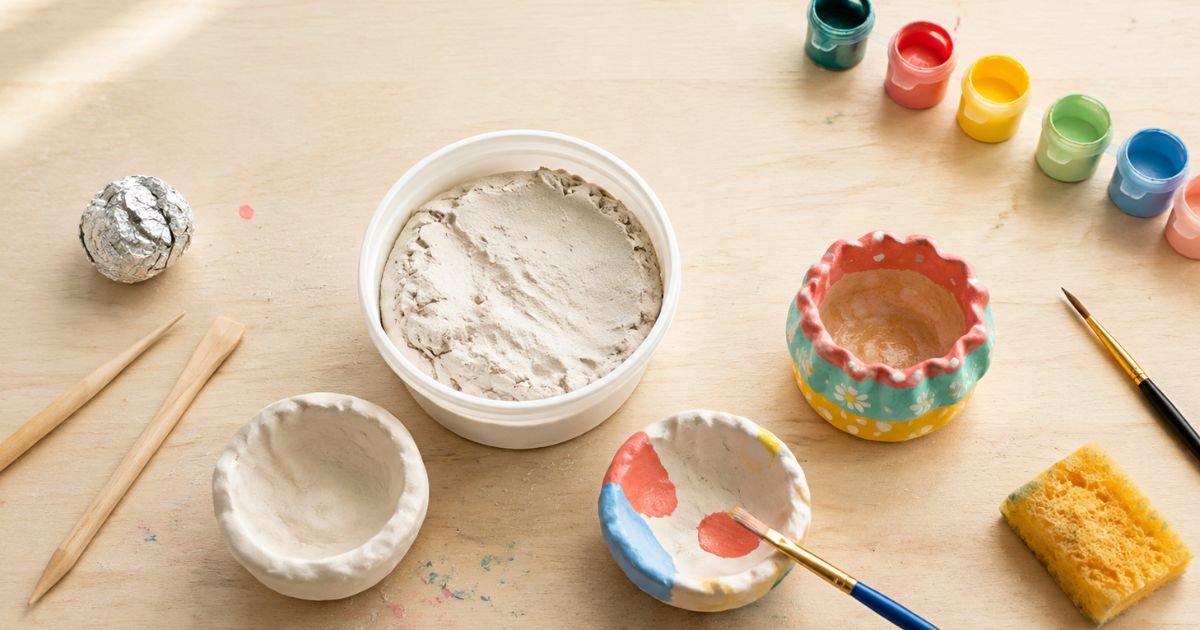
Crayola Air Dry Clay is one of the easiest ways to introduce kids — or yourself — to sculpting without a kiln, an oven, or any special equipment. This guide covers what Crayola Air Dry Clay actually is, how it compares to polymer clay and Model Magic, how long it takes to dry, the best paint and sealing methods, and how to keep pieces from cracking. Whether it’s a rainy-day project or a full lesson plan, here’s the complete breakdown.
Types of Clay for Kids
Most kids’ clay projects use one of three materials:
| Clay Type | Hardens By | Best For | Texture |
| Air Dry Clay | Air-drying, 24–72 hrs | Realistic sculpting, no kiln needed | Smooth, slightly heavy |
| Polymer Clay | Baking in a home oven | Small figurines, jewelry, beads | Firm, holds fine detail |
| Foam Clay / Model Magic | Air-drying | Young children, lightweight projects | Soft, spongy, light |
Crayola Air Dry Clay feels closest to real ceramic clay, which makes it the better teaching tool if kids will eventually try wheel-thrown pottery. Model Magic, also made by Crayola, is softer and easier for small hands but holds far less detail.
What Is Crayola Air Dry Clay?
Crayola Air Dry Clay is a non-toxic, self-hardening modeling clay that dries naturally at room temperature — no kiln, no oven. It’s sold in resealable 2 lb and 5 lb tubs, in white or terra-cotta, and typically costs under $10 for the smaller size. Marketed as craft clay for children, it’s soft enough to condition by hand but firm enough to hold a pinch-pot or coil shape.
Tools for Air Dry Clay
Keep the tool list minimal:
- A toothpick or pin tool for scoring
- A popsicle stick for shaping and blending
- A soft paintbrush for smoothing
- A small ball of aluminum foil for texture
- A damp sponge for cleanup
No expensive equipment required — most of this is already in a kitchen drawer.
How Long Does Crayola Air Dry Clay Take to Dry?
Most pieces are dry within 24 to 72 hours, depending on thickness. Thin, flat pieces can be ready in a day; a thick pinch pot may need the full three days. Drying on a wire rack instead of a flat plate speeds things up by letting air reach both sides.
How Long Can You Paint Air Dry Clay Before It Dries
Technically you can paint at any stage, but results depend on timing. Freshly sculpted, wet clay smudges under a brush. “Leather-hard” clay (dry to the touch but still slightly cool) can take light detailing. For clean color and no warping, wait for full cure — for Crayola Air Dry Clay, that’s usually the full 24–72 hour window.
Can You Paint Crayola Air Dry Clay Before It Dries
Here’s a genuine Crayola-specific advantage: unlike many air dry clays that shrink noticeably as they cure, Crayola Air Dry Clay shrinks very little, so it’s more forgiving if you paint slightly early. That said, painting fully dry pieces still gives the smoothest, most even coat.
Can You Paint Clay Before It Dries
For clay in general — not just the Crayola brand — painting before it’s dry is riskier. Wet clay traps moisture under the paint layer, which can cause bubbling, peeling, or cracks once the piece finally hardens. The safe rule across every clay type: let it dry first.
Can You Paint Air Dry Clay Before It Dries Reddit
Search any crafting forum and the consensus is consistent: most hobbyists report better results waiting the full dry time, even when a brand claims it’s paint-ready sooner. A common thread across crafting communities: rushing the paint step is the top cause of ruined pieces.
Attaching Clay Pieces
To join two pieces of air dry clay — like a handle on a mug — use the score-and-slip method:
- Scratch cross-hatch marks into both surfaces with a toothpick.
- Add a small dab of water (plain water works fine with Crayola clay).
- Press the pieces together firmly.
- Smooth the seam with a popsicle stick or a slightly damp brush.
Skipping this step is one of the most common reasons pieces fall apart once dry.
Can You Paint Air Dry Clay: Here’s What You Need
Before picking up a brush, gather:
- Acrylic or tempera paint
- A palette or scrap plate
- Flat and fine-detail brushes
- A cup of water
- Gesso or white paint (optional primer)
- A sealer for the final coat
With supplies ready, painting Crayola Air Dry Clay is genuinely simple — most projects only need two to three thin coats.
Can You Paint Air Dry Clay With Acrylic
Yes — acrylic is the most recommended paint for air dry clay. It’s inexpensive, dries fast, comes in nearly every color, and covers evenly in thin layers. Apply a base coat first, let it dry completely, then layer in details with a smaller brush.
Best Paints for Crayola Air Dry Clay
Not every paint performs the same way on a porous clay surface:
| Paint Type | Best For | Durability |
| Acrylic | Most projects, vibrant color | High |
| Tempera | Kids’ crafts, easy cleanup | Low–Medium |
| Watercolor | Soft, artistic washes | Low |
| Spray Paint | Large or detailed pieces | High |
Beyond paint, Crayola’s own decorating tips mention permanent markers, paint pens, and glitter glue as easy add-ons — no brush required.
Finishing Air Dry Clay
Once the base coat and details are dry, the finishing stage is what makes a piece look professional rather than “craft-table.” A light second coat evens out patchy spots, and a clear sealer locks the color in and protects the surface from scuffs.
Painting Air Dry Clay to Look Like Ceramic
To fake a kiln-fired, glazed look:
- Sand the dry clay smooth.
- Apply two to three thin, solid-color coats.
- Let each coat dry fully.
- Finish with a glossy sealer.
The glossy top coat sells the illusion — matte finishes read as “painted craft,” while gloss reads as “ceramic.”
How to Seal Acrylic Paint on Air Dry Clay
Popular sealer options include Mod Podge, clear acrylic spray varnish, resin, and wax — each giving a different sheen (matte, satin, or gloss). For beginners, brush-on Mod Podge is the easiest to control and least likely to drip.
How to Seal Air Dry Clay After Painting
Apply the sealer in thin, even coats with a soft brush, and let the piece dry completely — usually a few hours — before handling. Sealing too early, while the paint is still tacky, is the most common cause of a cloudy or streaky finish.
How to Keep Crayola Air Dry Clay From Cracking
Cracking usually comes down to three causes:
- Uneven thickness — roll clay to a consistent depth before shaping.
- Fast drying — keep pieces out of direct sun or heat vents.
- Painting too thick — build color in thin layers, not one heavy coat.
Small drying cracks can usually be fixed with a bit of slip (clay mixed with water) pressed into the gap, then re-sanded once dry.
Tips for Working With Crayola Air Dry Clay
A few small habits make a big difference:
- Keep hands lightly moisturized so clay doesn’t stick.
- Knead the clay before starting to make it smoother and easier to shape.
- Cover your work surface — air dry clay can stain wood and fabric.
- Use a turntable so you can paint all sides without touching wet paint.
How to Store Leftover Crayola Air Dry Clay
Leftover clay needs an airtight container or a resealed bag with the air pressed out. Once exposed clay hardens, it can’t be rehydrated back to a workable state — so only take out what you plan to use in one session.
Making Art with Kids: A Quick Example
Making art with kids doesn’t need a big setup. One elementary classroom used Crayola Air Dry Clay for a two-day pinch-pot project — sculpting on day one, painting after a full 24-hour dry on day two. The teacher’s go-to tip and technique: dry pieces on a wire rack overnight to prevent flat-bottom cracking. As one longtime art teacher put it, “the drying step is where most beginners get impatient — and that’s exactly where mistakes happen.“
Clay projects like this show up outside the classroom too — libraries sometimes fold hands-on crafts into their summer reading programs, and some offices use similar team-building art activities to get colleagues working with their hands instead of a screen. And once the piece is painted, a little thoughtful feedback on the artwork — asking what they made rather than judging how it looks — keeps kids excited for the next project.
Frequently Asked Questions
What kind of paint will stick to air dry clay?
Acrylic paint sticks best — durable, vibrant, and easy for beginners.
Is there a way to make air dry clay dry quicker?
Yes — use a wire rack in a ventilated, warm room.
How do you seal air dry clay before painting?
Apply gesso or white acrylic paint as a primer first.
What not to do with air dry clay?
Don’t paint while wet, over-thin pieces, or skip the primer.
Final Thoughts
Crayola Air Dry Clay is about as forgiving as sculpting gets: no kiln, minimal tools, and a wide window for painting and fixing mistakes. Follow the dry times, prime before painting, and seal in thin coats, and even a first-time project can look genuinely finished. Grab a tub, clear the table, and start shaping.
Arizona Tea Can Dimensions And Gatorade Bottle Dimensions And Soda Can Dimensions And Red Bull Can Dimensions And Dimensions of Monster Can And Coke Can Dimensions And Pokémon Card Dimensions Gatorade Bottle Dimensions And Arizona Tea Can Dimensions And Things That Are 10 Inches Long And 16 Inches Long And 40 Inches Long And 15 Inches Long And 12 Inches Long And How Far Is 20 Feet Visually? And Soda Can Dimensions And Karen Backfisch-Olufsen And Mary Carey And Matthew Mario Rivera And Constantine Yankoglu And

Hi, I’m John Wick, the admin at Magazineaura.com. I make measurements simple and easy to understand, from bed sizes to everyday length conversions. Clear guides. Accurate dimensions. No confusion.